
Visitor Attractions
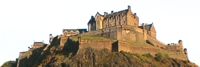
Edinburgh Castle
Edinburgh Castle is at the heart of the Scottish capital. An ancient stronghold perched on top the craggy remains of an extinct volcano, it is believed to have been an important fortification as long ago as the Iron Age.
Museum of Edinburgh
The Museum of Edinburgh is a series of interconnected 16th and 17th century buildings situated on the Royal Mile in the heart of Edinburgh Old Town.
Formerly known as Huntly House, the museum specialises in the history of Edinburgh from the earliest settlement to the present day.
Arniston House
Arniston House has been home to the Dundas family since 1571. The estate originally belonged to the Knight's Templar and then the Knight's of Saint John. George Dundas and his second wife, Katherine Oliphant from Dundas Castle in South Queensferry acquired the land from the Crown in 1571 for a younger son. A tower house stood on the sight from which two rooms were incorporated in to the present house you see today.
Edinburgh Castle Gardens
The Castle Gardens is on a steep hill directly under Edinburgh Castle to the South of the West Princes Street Garden. It is bounded by the railway line in the North and The Mound to the East.
Linlithgow Palace
The ruins of Linlithgow Palace are set in a parkland beside a loch in the town of Linlithgow, a quarter of an hour train ride from Edinburgh, or if going by car off the M9.
The Georgian House
As the name suggests, this New Town building, run by the National Trust of Scotland as a public museum, has been carefully restored as a typical Ge
Bute House
Bute House has been the official residence of the First Minister of Scotland since 1999. Located at No.6 Charlotte Square - the north side of the square - it is reckoned to be one of the finest examples of Georgian architecture in Edinburgh.
General Register House
General Register House is one of three Edinburgh archive buildings of the National Archives of Scotland (NAS).
Nelson's Monument
The Nelson Monument on Calton Hill was built between 1807 and 1816 to commemorate Admiral Horatio Nelson who died at the Battle of Trafalgar in 1805.
Scottish Mining Museum
The Edinburgh area used to be dotted with coal mines. Many of these were shut down in the era of Margaret Thatcher following the longest-strike - the miners's strike - in UK history.
Royal Bank of Scotland, St. Andrew Square
The Royal Bank of Scotland has gone from darling of the stock market to corporate basket case in a matter of years, but it still retains an attractive head office in the heart of Edinburgh's financ
The Royal College of Surgeons
The Royal College of Surgeons houses Scotland's largest medical museum with one of the most significant surgical collections in the world.
Lauriston Castle
Lauriston Castle is set in 30 acres of parkland and formal gardens with spectacular views overlooking the Firth of Forth.
Edinburgh Writer's Museum
Tucked away in Lady Stairs Close, up a narrow staircase entered half-way up the Mound, in Edinburgh Old Town, you will find the Edinburgh Writers' Museum.
Edinburgh City Chambers
This is where the City of Edinburgh Council conducts much of its business. In particular, members of the public can attend most meetings of the Council, Committees and Sub-Committees.
Scott Monument
The Scott monument is a brooding, 200-foot, Gothic spire which opened in 1846 in honour of the prolific local novelist Walter Scott.
Our Dynamic Earth
With its expansive, white marquee design, Dynamic Earth is a rather large, incongruous-looking structure at the edge of the Edinburgh Old Town
Camera Obscura and World of Illusions
In this Victorian rooftop chamber very near the entrance to Edinburgh Castle you can see live moving images of Edinburgh projected onto
John Knox House
This 15th century house was home to James Mosman, goldsmith to Mary Queen of Scots, and was the final residence of John Knox, leader of the Scottish Reformation and founder of the Presbyterian Chur

