
Women have the reputation for being lippy, yet manage to be both silenced and erased from much of history. One woman, though universally recognised through art, has few words attributed to her. That woman is Mary and the words of this play, based on the novel The Testament of Mary from award winning Irish writer Colm Tóibín, go a long way to redress that imbalance by giving voice to that hitherto silent woman.
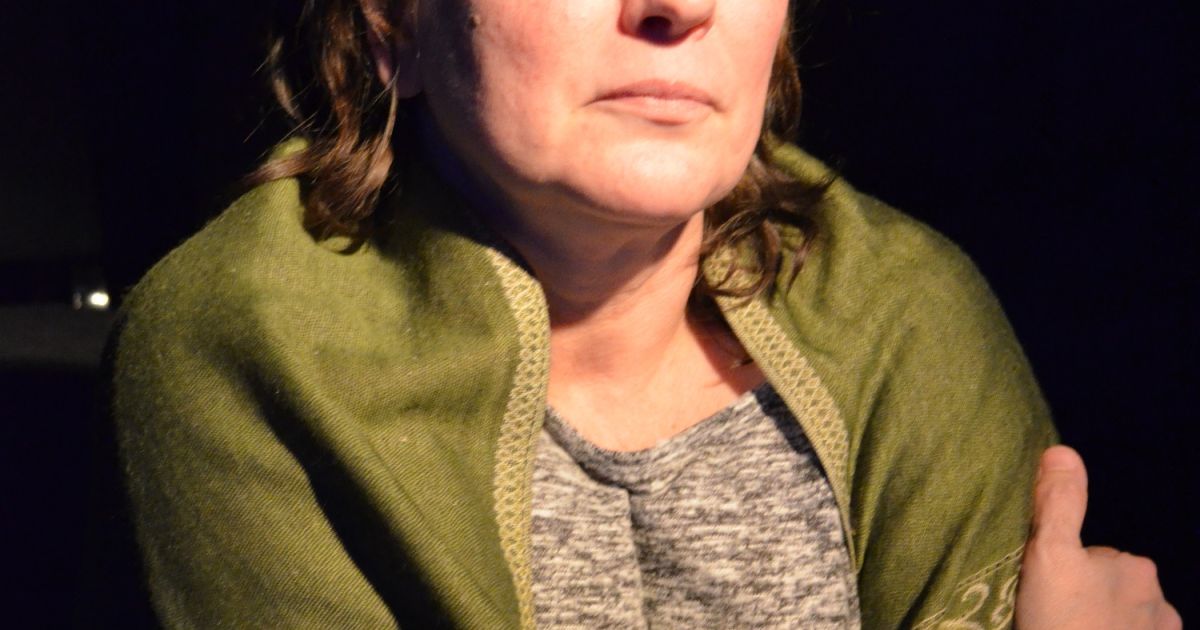
In an atmosphere of attending a dangerous underground witness bearing meeting, we meet a middle- aged widow woman with a troubled face wringing her hands and pacing the floor. She is a million miles from familiar blue draped, sweet faced images, instead she tousle- haired, sleepless and in exile but ready to tell her story.
Covering the pivotal points in the life of her son, whose name she cannot say, Mary gives a credible, secular version of events - the raising of Lazarus, the turning of water to wine, the resurrection. She is clear sighted throughout, subverting Matthew’s text by saying that in her experience ‘when more than two or three men gather there is either foolishness or cruelty’. She is witness to his becoming unrecognisable before her eyes as she tries to warn him, his painful denial of her and ultimately his horrific death when his ‘words were buried in howls’.
All this done to atmospheric sounds and only a set of simple props and no concession to costume of the period in a distant land over 2000 years ago. Jean Wilde’ s impassioned and anguished performance stands alone and is utterly credible, gripping her audience throughout with Tóibín’s compelling text. Her recreation of La Pietà towards the end catches the breath.
This wretched mother who has lost her son and had to live a vagabond life asks the big question, “Was it worth it?” and who can answer that? What is certain is that this version of The Testament of Mary most definitely is worth it. Wilde’s enthralling confession is storytelling at its finest.
3 to 25 August at 11am